Why Choose Lab Diamonds?
Why lab-grown diamonds have become a compelling choice for brilliance, size, style, and value.
Lab diamonds have changed what is possible in fine jewelry. For many shoppers, they make it possible to choose a larger diamond, stronger color and clarity, or a more ambitious finished design without the same budget trade-offs associated with comparable natural diamonds. They are real diamonds with the brilliance, durability, and beauty people expect from diamond jewelry—and their rapidly expanding availability has made high-quality diamond looks accessible across engagement rings, studs, tennis jewelry, pendants, and everyday fine jewelry.
The practical appeal: lab diamonds often let shoppers spend more of the budget on what is actually visible—size, cut, color, clarity, and the finished jewelry—rather than geological rarity.
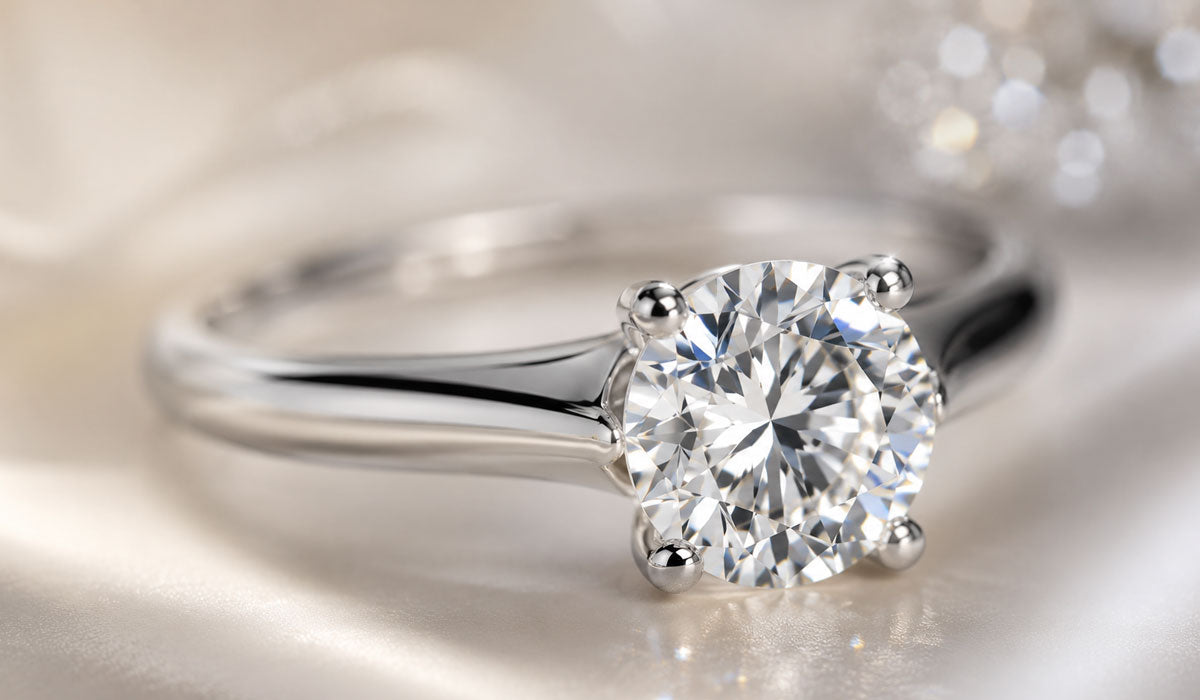
Lab Diamonds Are Real Diamonds
A laboratory-grown diamond has essentially the same chemical composition, crystal structure, physical properties, and optical characteristics associated with a natural diamond. The difference is origin: one formed through geological processes within the Earth, while the other grew in a controlled technological environment.
That distinction matters, but it does not turn a lab diamond into a substitute material. A well-cut lab diamond can display the brilliance, fire, scintillation, hardness, and durability that make diamond so desirable in jewelry.
More Diamond for the Budget
For many buyers, value is the most immediately noticeable advantage. Lab-grown diamonds generally sell for substantially less than natural diamonds with broadly comparable size and quality characteristics.
That difference changes the buying conversation. Instead of being forced to choose between size, color, clarity, and setting, shoppers can often improve several of those factors at once.
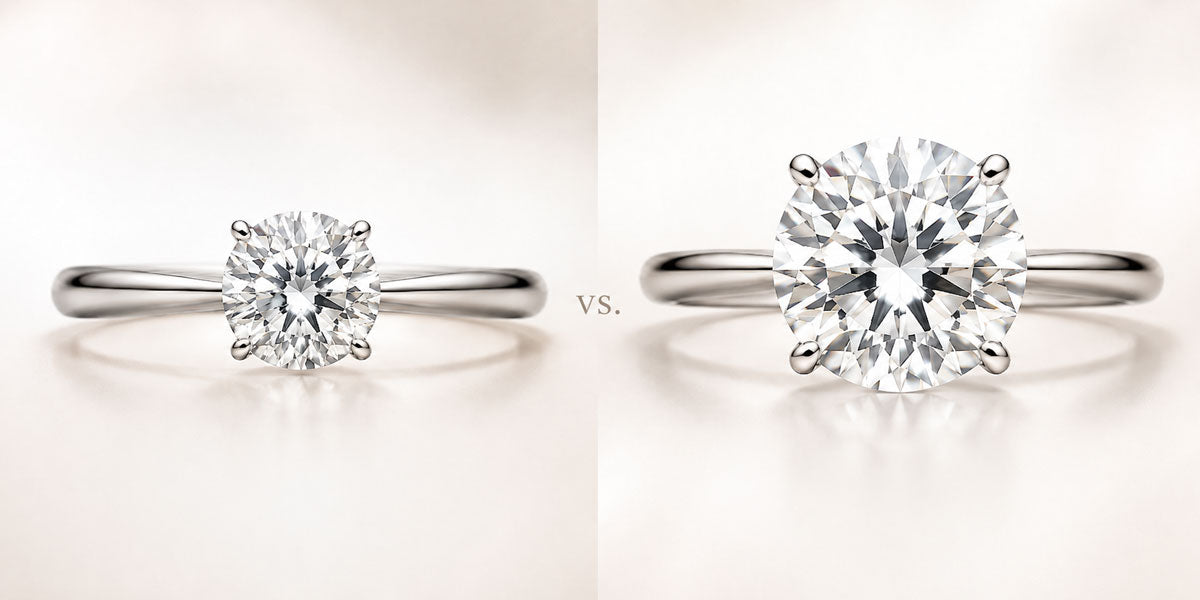
Go Larger
Move into a larger center stone or greater total carat weight without the same price increase.
Choose Better Color
Higher color grades that look bright and white become accessible across a broader range of budgets.
Choose Better Clarity
Clean, high-clarity stones are common in the lab-grown market without requiring the same rarity premium.
Upgrade the Design
More of the budget can remain available for platinum, side stones, pavé, halos, or substantial diamond coverage.
High Color and Clarity Become Much More Accessible
The quality mix available to ordinary jewelry shoppers has changed dramatically with lab-grown diamonds. High color and clarity grades that would command meaningful premiums in natural diamonds are frequently available at much more approachable prices in lab-grown stones.
That does not mean everyone should automatically buy the highest grade available. A D-color VVS diamond may not look meaningfully different in normal wear from a carefully chosen slightly lower grade. The advantage is choice: shoppers can often reach excellent color and clarity without sacrificing the size or design they actually want.
Better specifications are useful when they improve the jewelry—not simply because the letters on a report are higher. Cut and overall visual performance should still come first.
Exceptional Brilliance Still Depends on Cut
Lab origin does not guarantee a beautiful diamond. Just like natural diamonds, lab-grown stones vary in cut, proportions, symmetry, facet pattern, color, clarity, and overall appearance.
A beautifully proportioned diamond can appear lively, bright, and balanced. A poorly cut diamond can lose light or appear smaller than expected even when its color and clarity grades look impressive on paper.
Use The 4Cs to understand the quality factors in more detail.
More Freedom to Choose the Jewelry You Actually Want
One of the biggest changes created by lab diamonds is that the finished piece can become the focus of the purchase. Shoppers do not have to devote as much of the budget to the rarity premium of the center stone.
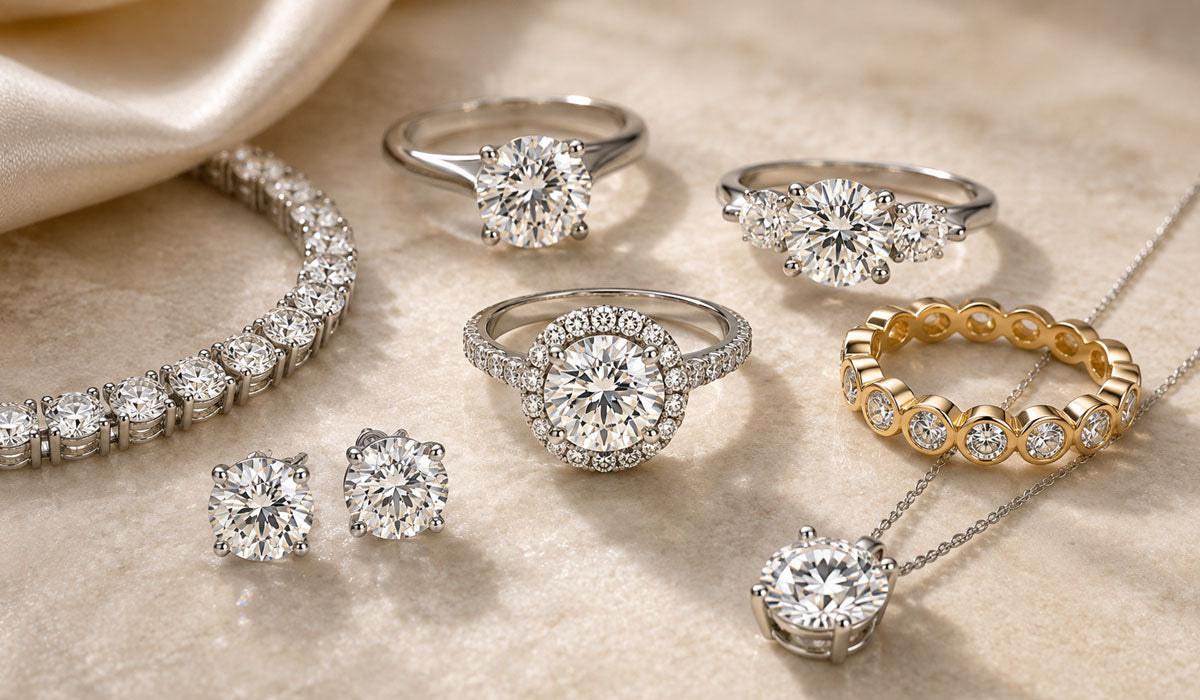
That might mean choosing a larger oval instead of a smaller round, a substantial three-stone ring instead of a solitaire, a full tennis necklace instead of a delicate pendant, or impressive diamond studs intended to be seen from across a room rather than across a jeweler's counter.
Lab Diamonds Work Across Fine Jewelry
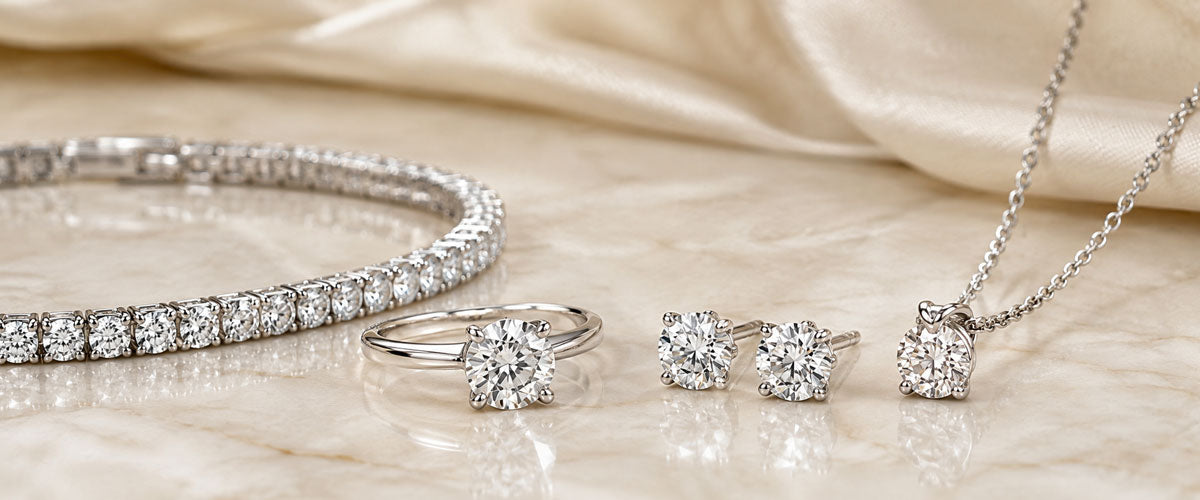
- Lab diamond engagement rings and solitaire rings
- Lab diamond stud earrings and hoops
- Lab diamond tennis bracelets
- Lab diamond tennis necklaces
- Lab diamond pendants and necklaces
- Three-stone and anniversary rings
- Pavé and diamond-intensive fashion jewelry
- Men's lab diamond jewelry
The economics become especially noticeable in jewelry containing many stones. Tennis bracelets, tennis necklaces, multi-row pieces, and pavé-intensive designs can contain substantial total diamond weight, making lab-grown diamonds particularly compelling.
Lab Diamond Studs Can Deliver Serious Presence
Diamond studs are a perfect example of where lab-grown pricing changes the experience. Because the design is simple, the stones themselves provide nearly all of the visual impact. Greater total carat weight can produce an immediately noticeable difference.
Lab-grown diamonds make substantial, bright, clean studs accessible to shoppers who might otherwise have been limited to much smaller natural diamonds.
Tennis Jewelry Is Another Natural Fit
A tennis bracelet or necklace may contain dozens of matched diamonds. Increasing individual stone size across an entire piece can quickly multiply total carat weight.
Lab diamonds make it possible to create substantial tennis jewelry with strong color, clarity, and visual consistency at price points dramatically below comparable natural-diamond versions.
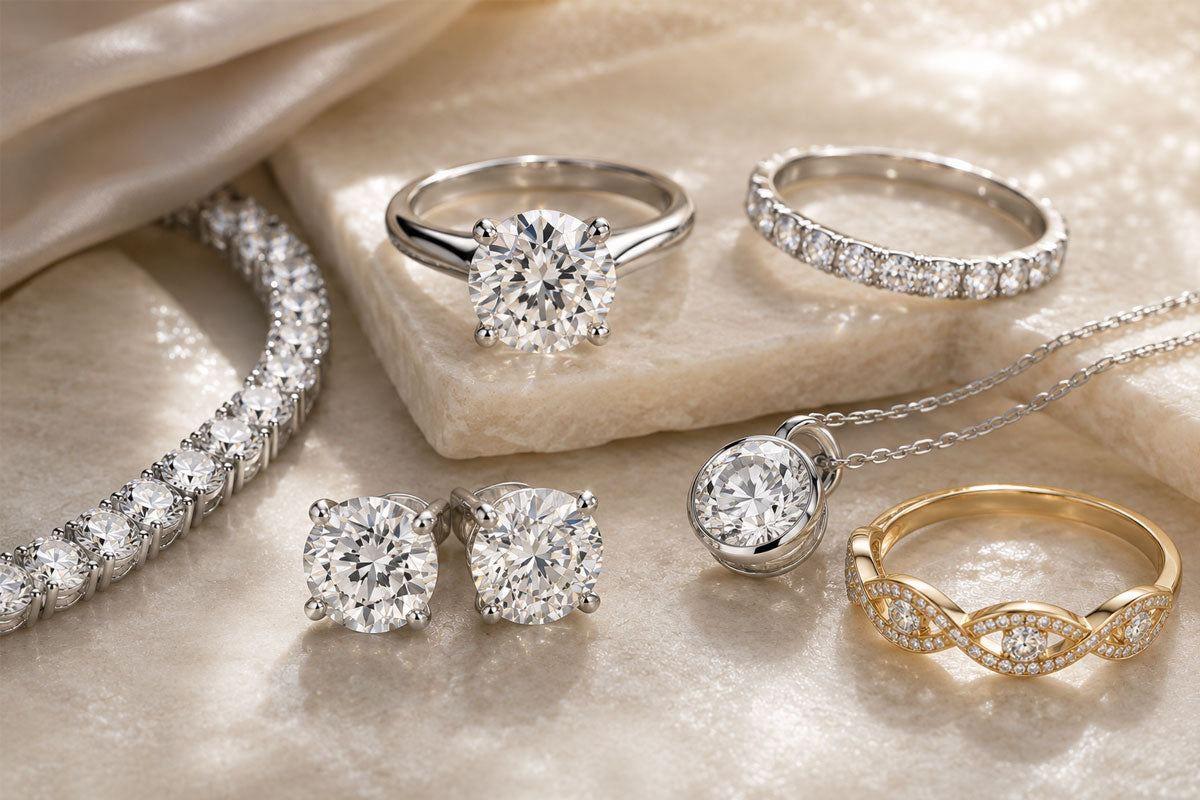
Lab Diamonds Are Durable Fine-Jewelry Stones
Diamond is valued not only for its beauty but for exceptional hardness. Laboratory-grown diamonds share diamond's characteristic hardness and are appropriate for rings, earrings, bracelets, necklaces, and other jewelry designed for regular wear.
As with all fine jewelry, durability also depends on setting construction, prongs, clasps, chains, and proper care.
How Lab Diamonds Are Made
Most gem-quality laboratory-grown diamonds are produced using High Pressure High Temperature (HPHT) or Chemical Vapor Deposition (CVD).
HPHT
High Pressure High Temperature uses intense heat and pressure to create conditions in which carbon crystallizes as diamond.
CVD
Chemical Vapor Deposition uses carbon-containing gases and a diamond seed to grow diamond material progressively over time.
Neither method automatically makes a finished diamond better. The individual stone's cut, color, clarity, proportions, and appearance remain what the wearer experiences.
Lab Diamonds Can Be Independently Evaluated
Significant lab diamonds may be accompanied by gemological reports describing characteristics such as carat weight, color, clarity, measurements, polish, symmetry, and laboratory-grown origin.
Some stones may also carry a microscopic laser inscription corresponding to the report number and identifying laboratory-grown origin.
A grading report describes gemological characteristics. It is not the same thing as an appraisal and it does not replace looking at the actual diamond.
What About Resale Value?
Lab diamonds are best purchased because you want to own and enjoy the jewelry, not because you expect the stone itself to appreciate.
Production technology and supply have expanded rapidly, and new lab-grown diamond prices have declined substantially over time. That creates extraordinary buying power for today's shopper, but it also places pressure on secondary-market values.
Natural diamonds have a longer-established resale market and inherently constrained geological supply, although natural diamonds should not automatically be treated as guaranteed investments either.
If rarity and resale history are important parts of the decision, see Lab vs. Natural Diamonds.
What About Sustainability?
Environmental comparisons deserve more care than simple marketing slogans. Natural diamond mining involves land use, energy, infrastructure, and other impacts. Laboratory diamond production also requires significant energy, and its footprint depends on the facility, technology, efficiency, and electricity source.
For that reason, “lab-grown” should not automatically be treated as synonymous with “impact-free.” Shoppers who prioritize environmental considerations should evaluate specific sourcing and production claims rather than relying on origin alone.
Who Should Consider Lab Diamonds?
Lab diamonds can be particularly compelling for shoppers who prioritize visible beauty and want to use their budget efficiently.
Engagement Ring Buyers
Ideal for shoppers who want greater center-stone presence, strong specifications, or a more elaborate mounting.
Stud Earring Buyers
Excellent when larger diameter and clean, bright stones are central to the look.
Tennis Jewelry Buyers
Particularly compelling when a design requires substantial total diamond weight.
Design-First Shoppers
Useful when the finished jewelry matters more than geological scarcity.
Lab vs. Natural Is a Personal Choice
Choosing a lab diamond does not make natural diamonds obsolete. The two categories serve different priorities.
Natural diamonds offer geological rarity, natural origin, and a formation story measured across immense spans of time. Lab diamonds offer the same fundamental diamond material with expandable supply and a radically different value equation.
If geological rarity is part of what makes the diamond meaningful to you, natural may be the better choice. If beauty, size, quality, and finished design are the priorities, lab diamonds can be remarkably compelling.
How to Choose a Lab Diamond
- Choose the shape you actually prefer.
- Prioritize cut and visual performance.
- Select color that looks appropriately white for the shape and setting.
- Choose sufficient clarity for a clean appearance rather than automatically chasing perfection.
- Compare physical measurements as well as carat weight.
- Consider the mounting, metal, construction, and overall finished design.
For a complete step-by-step process, continue to the Lab Diamond Buying Guide.
Why Shop Lab Diamonds at Robinson's Jewelers?
Robinson's Jewelers offers an extensive selection of lab diamond jewelry across rings, earrings, necklaces, bracelets, studs, tennis jewelry, and other designs. That breadth makes it possible to compare different shapes, sizes, metals, settings, and total carat weights rather than being limited to only a handful of choices.
Robinson's Jewelers is family-owned by Andrew and Tracy Robinson and has served more than 35,000 clients. Owner Andrew Robinson is a GIA Gemologist, bringing professional gemological knowledge to the process of understanding and selecting diamond jewelry.
Frequently Asked Questions About Lab Diamonds
Are lab diamonds real diamonds?
Yes. Laboratory-grown diamonds are diamond material and share essentially the same chemical composition, crystal structure, physical properties, and optical characteristics associated with natural diamonds.
Do lab diamonds sparkle like natural diamonds?
They can. Sparkle depends primarily on cut, proportions, facet arrangement, polish, symmetry, and the individual stone rather than origin alone.
Why are lab diamonds less expensive?
Their supply can expand through manufacturing, while natural diamond supply is constrained by geological occurrence and recovery. Improvements in production technology have also reduced lab-grown diamond costs.
Can I get better color and clarity with a lab diamond?
Lab-grown pricing often makes high color and clarity grades accessible at substantially lower prices than comparable natural diamonds, giving shoppers much more flexibility in how they allocate their budget.
Are lab diamonds durable enough for engagement rings?
Yes. Lab-grown diamonds share diamond's exceptional hardness and can be used in jewelry designed for everyday wear when properly set and cared for.
Should I choose lab-grown or natural?
It depends on your priorities. Natural diamonds emphasize geological rarity and origin. Lab diamonds generally provide greater flexibility in size, quality, and finished jewelry design for the budget.
Find Your Lab Diamond Jewelry
Shop rings, earrings, necklaces, bracelets, tennis jewelry, and newly added lab diamond designs.